Many people come to dubbing through their voice: someone told them it was beautiful, deep, recognisable. That is the starting misunderstanding. In Quebec, what opens the door of a dubbing studio is not the timbre. It is the ability to act truthfully, in sync with a mouth on screen, on the first read.
Dubbing, voice-over, narration: three different things
| Dubbing | Voice-over and narration | |
|---|---|---|
| What it is | Replacing the voices of a film, series or cartoon in another language | A voice with no face: ads, documentaries, audiobooks, e-learning, phone systems |
| Where | In a studio, mostly in Montreal, with a dubbing director | In a studio or a home studio |
| Who | Actors, UDA members for French dubbing | Actors and voice specialists, union or not depending on the client |
| Way in | Acting training, then dubbing training, then studio auditions | A demo, a home studio, platforms and direct clients |
How to become a dubbing actor in Quebec
French dubbing in Quebec is governed by a collective agreement between the Union des artistes (UDA) and the Association nationale des doubleurs professionnels (ANDP), in place since 1970 for performers. Performer work in dubbing is reserved for active UDA members. That is why the route is longer than people expect.
- 1. Acting training. A professional school, conservatory or private studio: dubbing requires being an actor first.
- 2. An acting career. The credits that lead to active membership are earned on contracts, in theatre, television, film or commercials.
- 3. Dubbing-specific training. You learn to read the rythmo band, to land a line on a lip movement and to play an emotion that is not yours within seconds.
- 4. Studio auditions. Dubbing directors cast from the actors they have heard and trust.
The rythmo band, the tool of the trade
In a French dubbing studio, the text scrolls under the picture, synchronised with it: this is the bande rythmographique, or rythmo band. Every syllable arrives on screen at the moment it must be spoken. Invented in Paris in the late 1940s, the technique was modernised by Quebec companies. Mastering it is what separates a good actor from a dubbing actor: you act while reading, without ever sounding like you are reading.
Why Quebec dubbing exists, and why it sounds accent-free
Why it exists. Section 83 of Quebec's Cinema Act allows a film with no French version yet to get a 45-day temporary permit if its distributor files a contract to dub it into French in Quebec. That is a strong incentive to dub here, and fast. France, meanwhile, requires films released there to be dubbed in France or Europe, except films of Canadian origin, so Quebec versions mostly circulate in Canada.
Why no accent. Everyone has an accent, Quebec dubbing actors included. But dubbing is done by convention in a so-called international French, without marked regional expressions or pronunciations. A dubbed version has to work for the whole francophone audience watching it and should not date with the slang of an era. It is a learned acting register, not how these actors speak in daily life.
Dubbing in English, cartoons and film
- In English, Montreal has an English-language voice and dubbing market under ACTRA, smaller than Toronto's or Los Angeles'. Most roles require English with no noticeable French accent.
- Animation follows the same route as film dubbing, with more room for character voices. Sync is sometimes looser, the acting rarely easier: you have to hold an energetic character over hours of recording.
- Film dubbing is the most demanding on sync, because mouths are filmed in close-up and the audience sees everything.

How to become a voice-over artist from home
Voice-over is the most open market, and often where you can start without a union card: local ads, web videos, e-learning, audio guides, phone messages, audiobooks. Part of this market is covered by the UDA or ACTRA, part is not, depending on the client.
The home studio that is enough to start
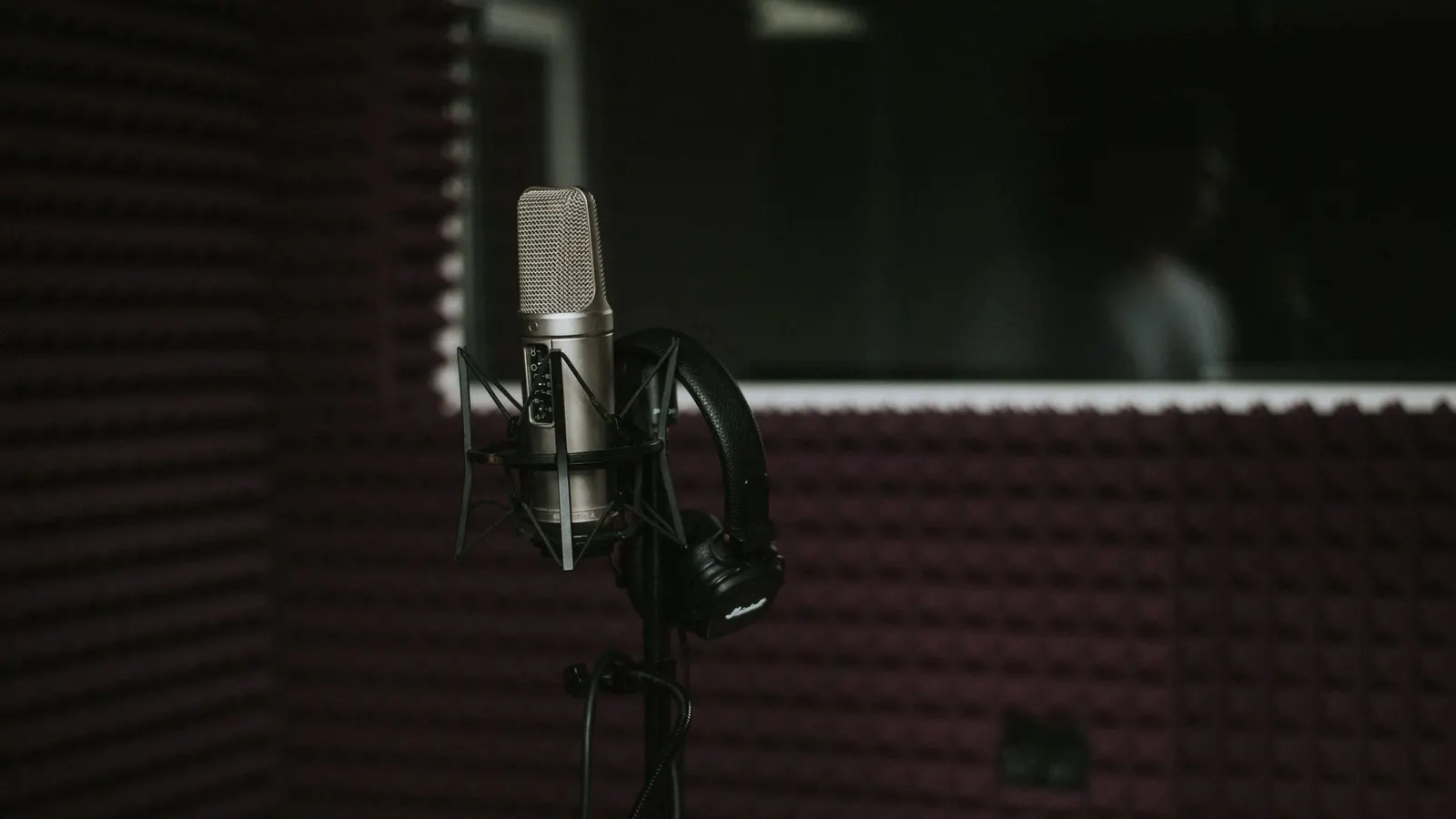
- A dead space: a closet full of clothes, or a corner surrounded by blankets, often beats a living room with an expensive mic.
- A condenser microphone and an audio interface, or a good USB mic to begin with.
- A pop filter and a stable stand.
- Recording software: Audacity is free, Reaper is cheap and widely used.
- Closed-back headphones so you hear yourself without the sound bleeding into the mic.
Voice work online
Platforms such as Voices.com and Voice123 connect clients with voices worldwide, French-Canadian voices included. You answer calls with auditions recorded at home. Competition is global and rates vary a lot: it is good practice and a source of first clients, rarely a steady income at first. Be wary of any offer that asks you to pay to be heard.
The demo
A voice demo usually runs one to two minutes and opens with what you do best. Make one per use rather than one for everything: commercial, narration, characters. A badly recorded demo closes more doors than no demo at all.
The Access Plan
Find the voice and casting calls that fit you, without spending your evenings on it
The six-line profile that sorts a casting call in five seconds, the 90-second test against fake calls and 4 emails ready to copy. 12 pages, free.
One email, not ten. Unsubscribe in one click.
By sending your address, you agree that Castflow emails you this document and keeps you posted on what's new. Privacy policy.
How to do good narration
- Mark up your script before recording: words to stress, breaths, pauses. Improvised narration is audible.
- Talk to one person. Picture someone specific in front of you, not a crowd. The voice becomes natural.
- Slow down. A pace slightly slower than conversation gives the listener time to understand, especially in e-learning and documentary.
- Keep the same distance from the mic from start to finish, for consistent volume and colour.
- Record in short blocks and redo the whole sentence when you slip, not just the word.
- Drink room-temperature water and avoid dairy before a session: mouth noises are hard to clean up.
Where to start, concretely
If your goal is dubbing films and series, start by becoming an actor: it is the only door. The guide to landing your first auditions in Quebec explains the UDA loop and how credits add up. If your goal is voice-over, set up your recording corner this week, record a one-minute demo and start answering calls.
Either way, calls are scattered across dozens of groups and platforms. Castflow for actors follows them for you and only shows you the ones that match your profile, language and region.