
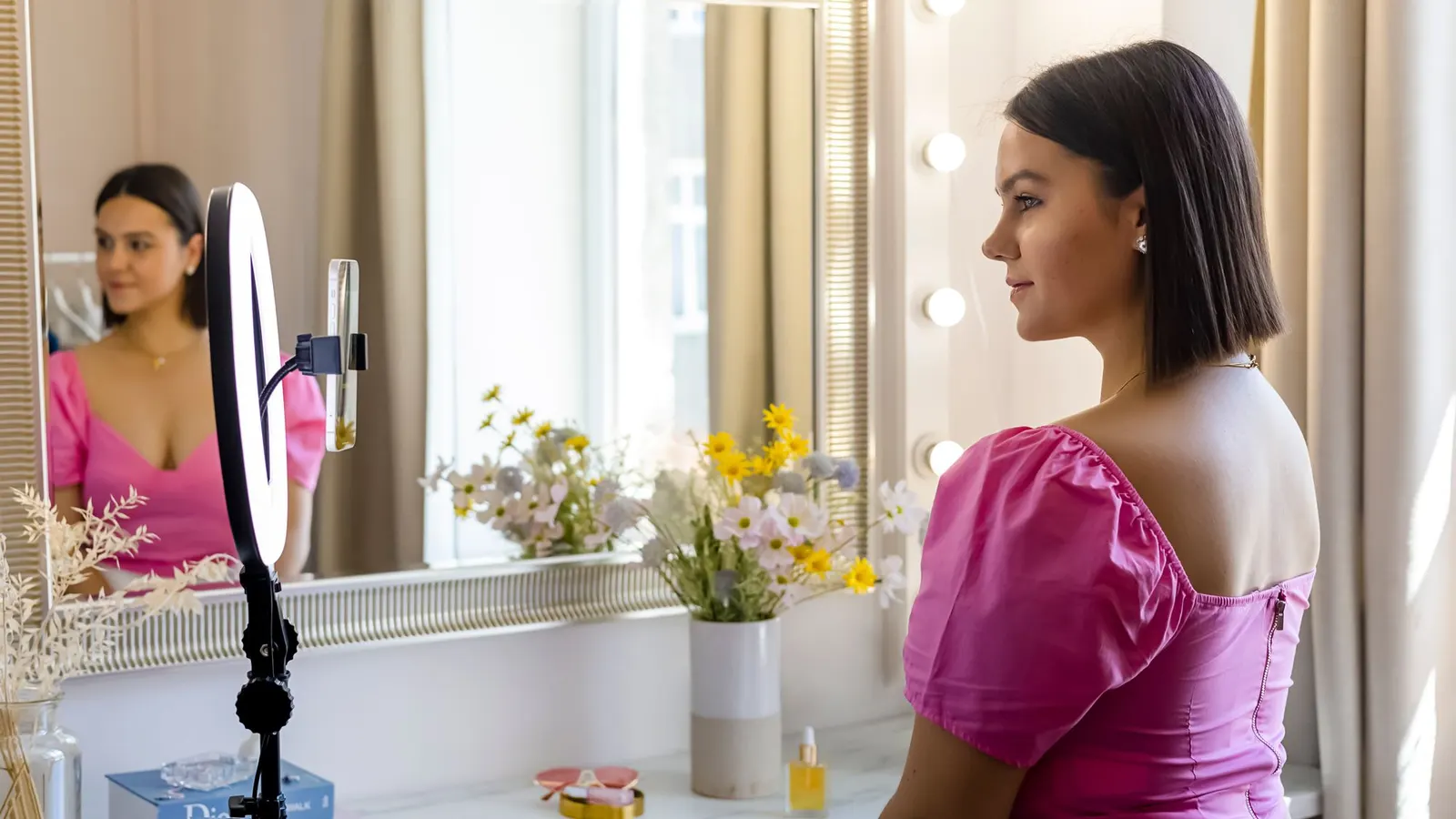
The self-tape has replaced the first audition round on almost every production in Quebec and across Canada. Instead of travelling, you get a scene, record yourself at home and send the video to the casting director, often within 24 to 72 hours.
That is good news if you live far from Montreal or Toronto. It is also a trap: the person watching your video is watching dozens of others for the same role, and decides within seconds whether to keep going. Anything that stops them seeing your acting costs you the role.
Gear: what you actually need
You do not need a camera. A recent phone shoots better than any casting director requires. If you spend money, spend it on sound and light.
| Item | The minimum that works | Why |
|---|---|---|
| Camera | Your phone, rear camera | The rear camera is better than the selfie one |
| Tripod | A phone tripod or a stack of books | A moving frame pulls attention from the face |
| Light | A window facing you, or a soft lamp | The face must be readable, without hard shadows |
| Sound | A room with a rug, curtains and furniture | The echo of an empty room is audible immediately |
| Microphone | Optional: a wired lavalier mic | Useful if the room still echoes |
| Background | A plain grey, blue or beige wall | Nothing behind you should catch the eye |
In our survey of 148 actors in Quebec, 34% had spent money on self-tape gear in the past year. Most of the useful purchases cost under $100 in total: a tripod, a ring light or a soft lamp, and a lavalier mic.
How to do a self-tape, step by step
1. Read the request in full, twice
Half the mistakes come from a skipped instruction. Before shooting, write down: the orientation (almost always landscape), the framing requested, whether a slate is wanted, the number of takes, the file format, how to send it and the deadline including the time. If the request says no slate, do not slate.
2. Prepare the scene before you think about the camera
Who is this character, who are they talking to, what do they want in this scene and what is stopping them? Learn the lines well enough to look at your reader. A glance at the page is tolerated; reading is not.
3. Set up light, sound and frame
- Light: the source in front of you or slightly to the side, never behind. Turn off ceiling lights that cast shadows under the eyes.
- Sound: pick the most furnished room. Turn off the ventilation, the fridge if you can hear it, and put your phone in airplane mode.
- Framing: camera at eye level, framed from the chest to just above the head, with a little room on top. If a wide shot is requested, show your full body in a separate take.
4. Find a reader, not a scene partner
The person giving you the lines stands next to the camera, off frame, so your eyeline passes just beside the lens. They read clearly, more quietly than you, without acting. If nobody is available, fellow actors often read lines for each other over video call.
5. The slate
When requested: your name, your height if asked, your city, sometimes your agency and union status. Look at the camera, smile normally and stay neutral. Five seconds is enough. Profile or hand shots only if requested.
6. Shoot few takes, and choose fast
Two or three genuinely different takes beat fifteen near-identical ones. Past that, fatigue shows. Send the most alive take, not the cleanest. A small hesitation in an honest take costs you nothing.
7. Name the file and send it as requested
Trim the start and the end, no effects or music. Name the file with your first name, last name, role and project: a file called IMG_4471.mov in an inbox is a lost file. Send it the way they asked. If it is a transfer link, check when it expires: free links on some services die after 7 days, often before the final decision.

Mistakes that get a self-tape cut before the acting
- A portrait video when landscape was requested, or the reverse.
- Backlight: a window behind you turns your face into a silhouette.
- Bathroom or kitchen echo, or a reader louder than you.
- A frame so wide the face is too small to read an emotion.
- A take sent after the deadline, even by ten minutes.
- A link that requires access or has expired.
What makes a self-tape good, not just clean
Once the technique is handled, a self-tape does not win on perfection. It wins on a clear choice. The casting director wants to know what you would do with the character, not whether you can recite. Really listen to your reader, let the silences exist, and play for a camera one metre away: smaller than on stage, and more precise.
A technically perfect self-tape with no intention gets forgotten. A simple one with a real choice gets a callback.
The Access Plan
The self-tape setup for under $100, and the rest of the plan for your first auditions
The exact gear list, the 90-second test to spot a fake casting call, 4 emails ready to copy and the plan for your first 30 days. 12 pages, free.
One email, not ten. Unsubscribe in one click.
By sending your address, you agree that Castflow emails you this document and keeps you posted on what's new. Privacy policy.
How to prepare for an open call audition
An open call is open to anyone, with no invitation and often no agent. You show up at an address and a time, and you wait your turn. It is rarer than the self-tape, but it still happens for youth roles, musicals, some commercials and productions looking for a very specific profile.
- Arrive early and plan for hours of waiting. Eat first.
- Bring a recent photo and a one-page résumé, even if they are not requested.
- Prepare a short piece, one minute or less, that suits you. If sides are handed out on site, read them several times in the waiting room.
- Wear something simple and plain, close to the character without being a costume.
- Be ready to do it differently. You will often be asked to redo it with a new direction: that is what is being assessed, your ability to adjust.
Acting for TV: what changes in front of a camera
Acting for television needs the same foundations as the stage, with three differences you can train:
- Scale. The camera sees everything. A look is enough where the stage needs a gesture.
- Repetition. The same line is shot from several angles, and you have to replay it identically: same gesture, same moment, same intensity.
- Set technique. Hitting your mark, finding your light, never looking into the lens unless directed.
The self-tape is the best on-camera training there is, and it is free: shoot a scene, watch it the next day, do it again. To go further, several Montreal studios offer on-camera acting classes.
And after you send it?
Usually: nothing. That is normal, and it is not a verdict on your work. In our survey, getting no feedback after an audition or a self-tape came up in 16% of the comments about the job's frustrations. Keep a record of every submission (project, role, date), move on to the next one, and do not chase the casting director.
For most people the real limit is not the quality of the self-tape. It is getting enough of them. That means seeing calls in time: that is what Castflow for actors does, following published casting calls and only showing you the ones that match your profile. And if you are just starting, the guide to landing your first auditions in Quebec explains where the calls come from.