

How to become a talent agent: the job before the company
An agent represents performers to productions. Day to day that means receiving casting breakdowns from casting directors, picking within minutes the people on your roster who fit, submitting their profiles, arranging auditions, negotiating contracts and following up on payments. It is a job of relationships and speed.
Most agents who last learned the job from the inside before opening their own agency:
- Assistant at an existing agency, to learn submissions, agreements and casting directors.
- Casting assistant, to see the process from the production side and learn what gets a submission read.
- Production coordinator, to understand schedules, contracts and the constraints of a set.
- Former performer, who knows the industry and what talent needs.
How to set up a talent agency: the steps
- Choose a legal structure: sole proprietorship or corporation. An accountant can help you choose based on projected income and risk.
- Register the business with the Registraire des entreprises du Québec, under a name no other agency already uses.
- Open a separate bank account, especially for fees that pass through the agency before being paid to talent.
- Check your CNESST obligations. Since 2020, personnel placement agencies in Quebec need a licence. Depending on your model, particularly if the agency supplies workers to clients rather than representing artists who contract directly with producers, have your situation confirmed by the CNESST or a lawyer before you start.
- Register for sales tax (GST and QST) once you pass the revenue threshold.
- Take out professional liability insurance.
Industry rules to know before your first contract
- The collective agreements. UDA for French-language productions, ACTRA for English-language ones: role categories, minimum fees, residuals, working conditions. An agent who does not know them negotiates blind.
- The agents' code of ethics published by the UDA, which notably caps commission at 15% and forbids charging for auditions.
- The Association québécoise des agents artistiques (AQAA), founded in 1995, which brings together Quebec agencies and represents the profession.
- Representing minors, which requires parental consent, regulated hours and particular care about fees.
The talent agency business model
An agency earns its living on commission from the contracts it secures, usually 15% of the fee. In our survey of 148 actors in Quebec, 76% of represented performers paid 15%, and 39% had also paid their agency more than $300 in annual fees.
That is where reputation is made or lost. Fees exist and are justified when they fund a real service (photos, profile, website). But an agency whose income comes mostly from its talent's fees rather than their contracts loses their trust, and the industry is small. In the same survey, 30% of represented performers got 3 auditions or fewer from their agency in a year: those are the ones who leave.
| What keeps an agency going | What brings it down |
|---|---|
| A roster built from complementary profiles | Several interchangeable performers competing for the same roles |
| A submission sent within the hour | A casting call handled the next day, after the roles are already seen |
| Up-to-date availability | Submitting someone who is shooting elsewhere |
| Income from contracts | Income from registration fees |
| Tracked numbers: submissions, auditions, bookings | No idea of each performer's conversion rate |
Building your first roster
A good roster is not a long one. It is one where each profile meets a real production need, with no duplicates. Start small, with performers you can genuinely champion, and build your reputation with casting directors one relevant submission at a time. A casting director remembers the agent who sends three good profiles, not the one who sends thirty.
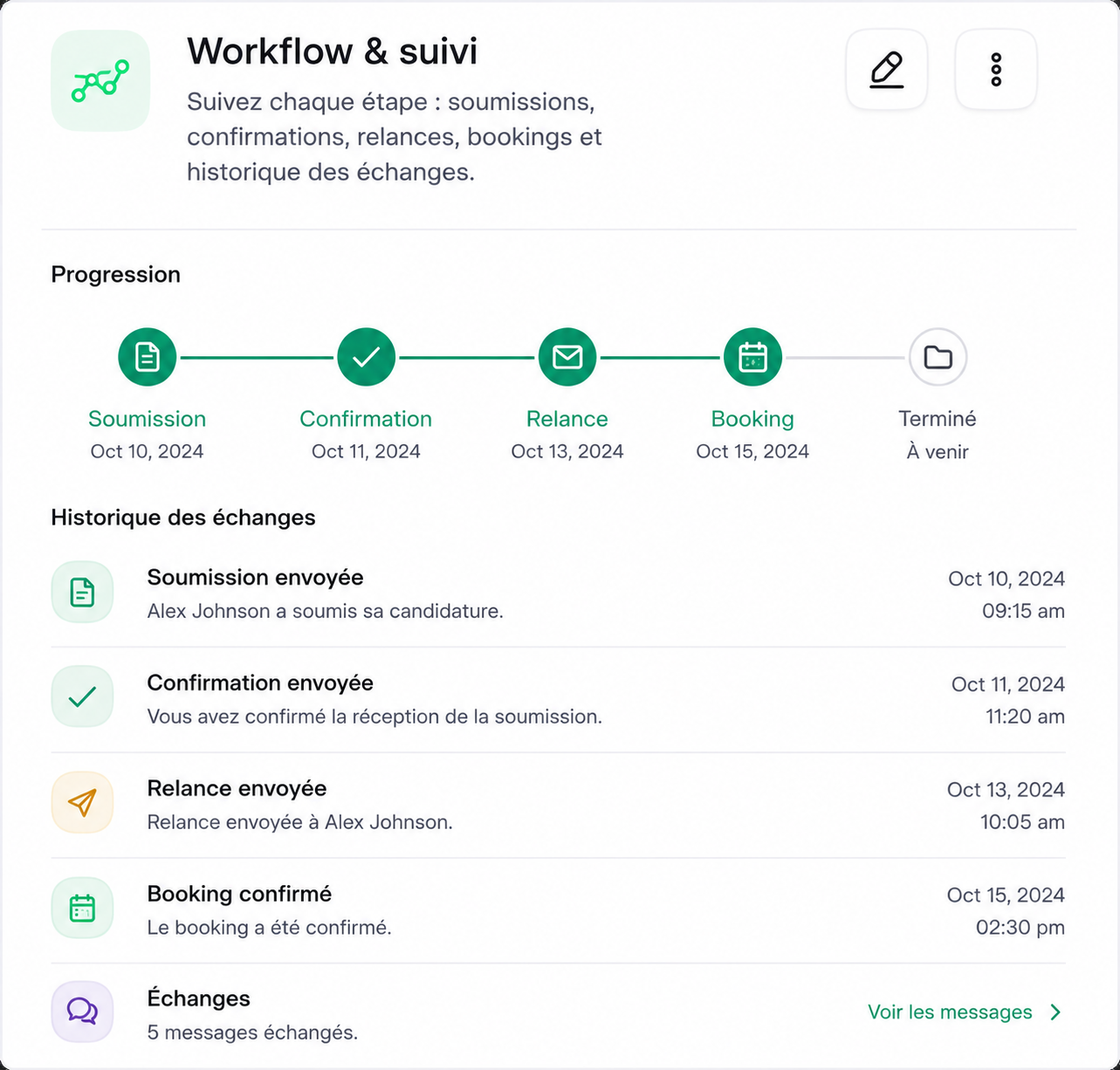
The tools to run an agency
Many agencies start with a spreadsheet, an inbox and a shared calendar. That works up to about twenty performers. Beyond that, three things break: finding the right profile fast enough when a call arrives, knowing who is available, and tracking what was submitted to whom. Our guide to choosing talent agency software compares the options, and the 5 numbers that run a talent agency explain what to measure from month one.
That moment is what Castflow is built for: Quebec software that reads casting calls, suggests the performers on your roster who fit, manages their availability and sends submissions, in French and English.