What does an actor do, day to day?
The visible part, the shoot or the performance, is the smallest. The rest of the time goes to work nobody sees:
- Looking for work: watching calls, sending self-tapes, auditioning. In our survey of 148 actors in Quebec, 90% look for projects every week, and half spend more than an hour at it.
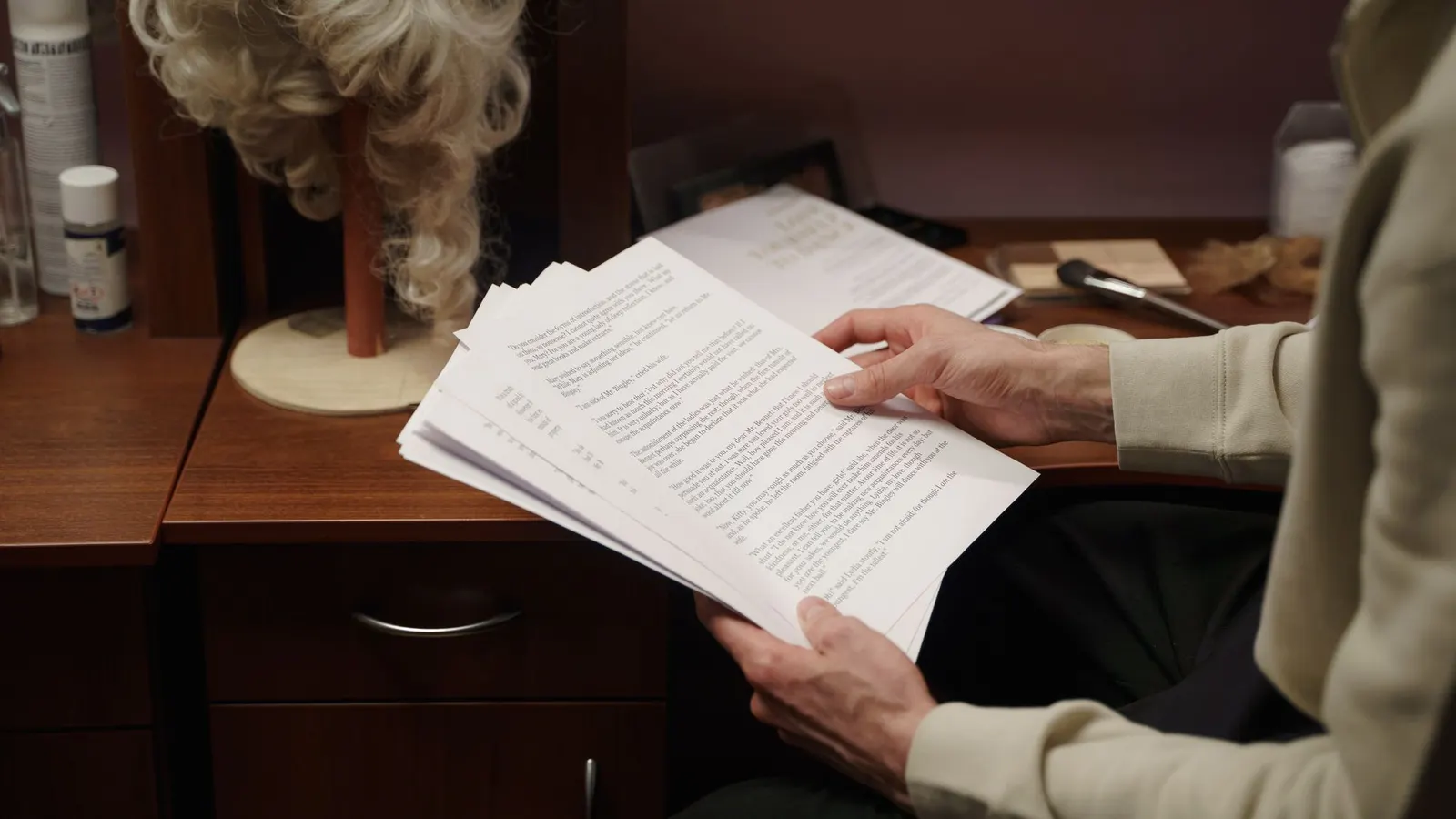
- Preparing: learning lines, analysing the character, rehearsing. In theatre, weeks of rehearsal come before opening night.
- Staying in shape: classes, workshops, voice and body work, reading.
- Running a small business: invoices, self-employed taxes, photos, résumé, the relationship with an agency if you have one.
- Working another job: most actors have one, especially early on. It is our respondents' number one complaint, because auditions fall during working hours.
How actors get paid in Quebec
An actor almost never has a salary. They are paid per contract, through a fee, usually as a self-employed worker. On a production covered by a collective agreement, here is where the money comes from and where it goes:
| Item | What it is |
|---|---|
| The fee | What the work pays, at least the agreement's minimum for the role category (lead, second, third role, background) |
| Residuals | Payments later on, when the work is rebroadcast or exploited elsewhere, depending on the agreement |
| Caisse de sécurité des artistes | Under the UDA-AQPM agreement, the producer pays 10% of the fee into it and withholds 2% from the artist, for group insurance and retirement savings |
| Fonds COPAR | The producer pays 4% into it for the artist's paid leave |
| Agency commission | Usually 15% of the fee, paid to the agency if it secured the contract |
| Income and sales tax | The artist's responsibility, including registering for sales tax past the revenue threshold |
For a concrete reference point: in film, the minimum for a background performer under the UDA-AQPM agreement is $224 for an 8-hour day since May 2026. Speaking roles pay much more, by category. But a high fee does not make a high income: what counts is the number of contracts in a year. The guide to landing your first auditions in Quebec gives the real median incomes of artists, and they are modest.
How to become a professional actor
In Quebec, professional artist status is governed by a law recast in 2022, which lets recognised artists' associations negotiate collective agreements with producers. For a performer, “going professional” means very concrete steps:
- Working under a collective agreement, first as a permit holder (a work permit paid contract by contract).
- Becoming an apprentice member of the UDA, the first membership status, open to graduates of recognised schools and to self-taught performers under the Union's conditions.
- Becoming an active member by earning the required 30 credits.
- On the English side, ACTRA plays that role for productions shot in English.

How to become an actor without training
It is possible: no diploma is required, and the UDA accepts self-taught apprentice members. But “without training” does not mean “without learning”. Those who make it replace school with something else:
- Private classes or workshops, evenings or weekends.
- Community theatre and improv, where you perform for a real audience, often close to home.
- Background work, to learn how a set runs. Our guide to becoming an extra explains where to start.
- Student and independent short films, which give you footage to show.
- Self-tapes, the best on-camera training there is, and free.
How to become an actor at 13
- A parent's consent and presence are required, on set and at auditions.
- Youth talent agencies represent children and teens. A serious agency never asks for money up front to represent a minor.
- Background work is more accessible before 16: on a UDA production, extras under 16 do not have to be members.
- School theatre, improv leagues and weekend classes build experience without hurting school, which remains the priority on every youth set.
The Access Plan
The 30-day plan to go from “I'd like to” to your first auditions
One action a day, the 90-second test against fake calls, 4 emails ready to copy and the self-tape setup for under $100. 12 pages, free.
One email, not ten. Unsubscribe in one click.
By sending your address, you agree that Castflow emails you this document and keeps you posted on what's new. Privacy policy.
How to become a Netflix actor, or an actor in Hollywood
You do not apply to Netflix. Netflix productions shot in Quebec and Canada cast like every other production: through independent casting directors, who go through agencies and public calls. Becoming a “Netflix actor” means becoming an actor, full stop, and being visible to the casting directors working on those projects.
For Hollywood, you first need the right to work in the United States, which for a Canadian means a work visa, and American productions mostly hire under the SAG-AFTRA union. The realistic route runs through Canada: Montreal, Toronto and Vancouver host many American shoots, and that is where most Canadian actors earn their first English-language credits.
How to become a famous actor
Nobody can promise fame, and you should be wary of anyone selling it. What can honestly be said: the actors who last are the ones who work often, not the ones who get known right away. Consistently showing up where roles travel matters more than luck. Social media visibility can help you get noticed, but it never replaces a good audition.
To be where roles travel, you first have to see them. Castflow for actors follows published casting calls and only shows you the ones that match your profile, union status and region.